CONTACT



OEM Guide: How to Develop Your Own Inflatable Tent Brand in 2026
OEM Guide: How to Develop Your Own Inflatable Tent Brand in 2026
As the demand for lightweight, durable, and quick-setup outdoor shelters continues to rise, inflatable tents have become one of the fastest-growing categories in the outdoor equipment industry. Brands worldwide are shifting from traditional pole tents to modern air-beam structures due to their superior convenience, safety, and performance.
If you are planning to launch or expand your inflatable tent brand in 2026, this OEM guide will help you understand every step of the development process — from concept design to mass production. Whether you are an outdoor gear distributor, e-commerce brand, or private-label company, working with a reliable inflatable tent manufacturer is essential for building a competitive product line.
1. Understanding Inflatable Tent Technology
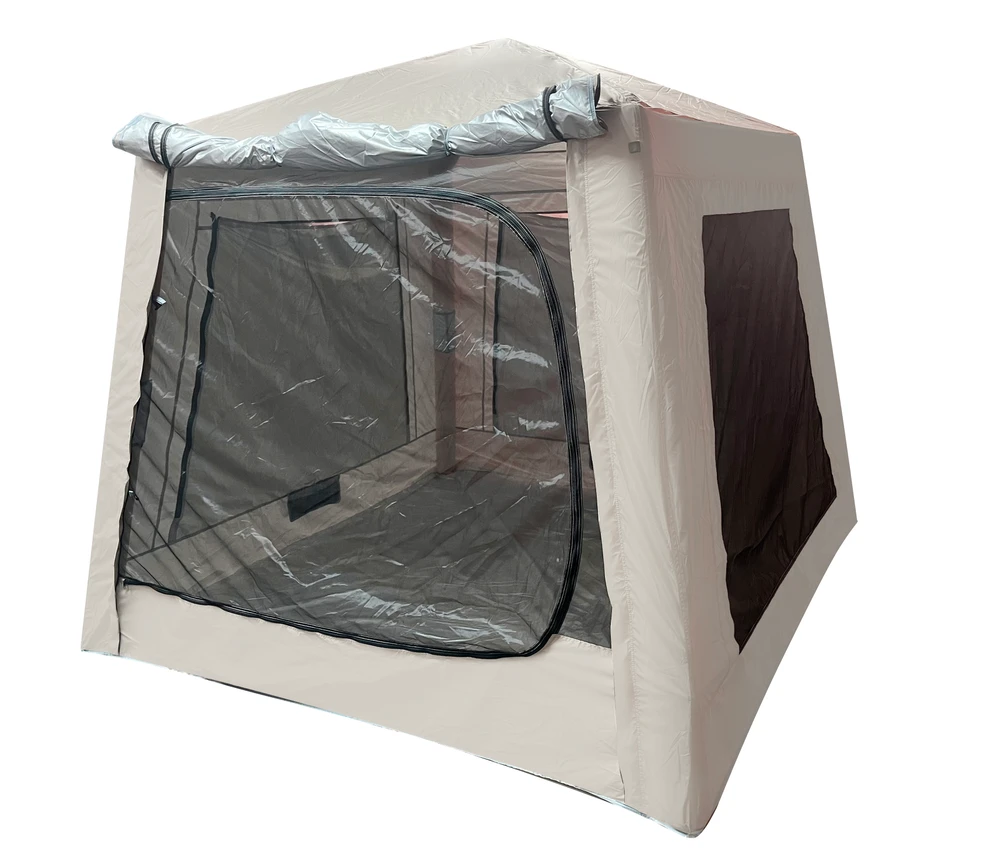
Inflatable tents, also known as air-beam tents, rely on pressurized air columns instead of metal or fiberglass poles. The air beams are typically made from PVC-coated polyester fabric or TPU-coated fabric, offering high strength, flexibility, and excellent weather resistance.
Core Advantages
-
Fast setup — inflate within 2–10 minutes
-
Lightweight & portable — no rigid poles needed
-
High structural safety — no metal frame injuries
-
Strong weather resistance — withstands wind, rain, UV
-
Compact transport size — ideal for shipping and logistics
These features make inflatable tents suitable for camping, emergency shelters, rescue missions, outdoor events, military use, and more.
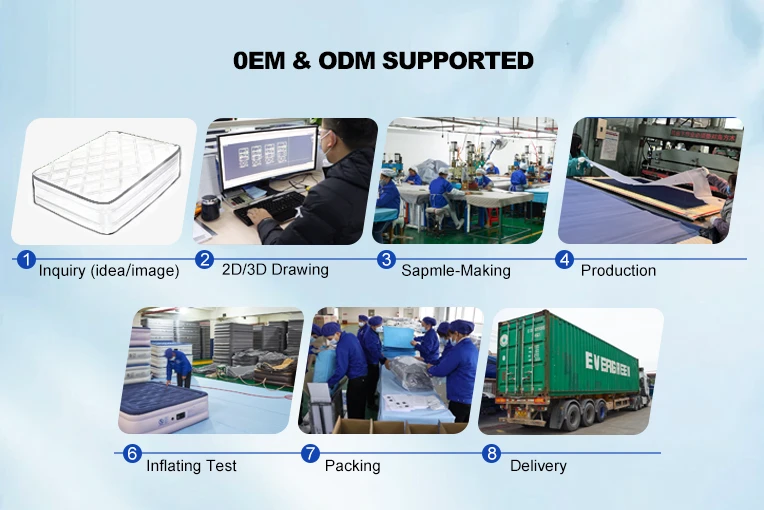
2. Why OEM Is the Best Path for New Inflatable Tent Brands
Developing an inflatable tent independently requires knowledge of air-beam engineering, airtightness standards, fabric bonding, and structural design. The cost and trial-and-error time are extremely high.
Partnering with an OEM factory provides five key advantages:
(1) Proven Engineering Experience
Professional manufacturers have years of R&D experience with high-pressure air columns, heat-sealing techniques, and tent architecture.
(2) Reliable Material Supply Chain
OEM factories can provide:
-
PVC/TPU coated fabrics
-
Oxford or polyester outer tents
-
Reinforced airtight chambers
-
Branded accessories
(3) Mass Production Stability
A qualified factory can ensure:
-
Stable materials
-
Consistent heat-sealing quality
-
High-precision cutting
-
Standardized QC procedures
(4) Faster Time-to-Market
Instead of spending years on R&D, brands can launch new models within months.
(5) Custom Branding
From color and fabric to packaging and logos, OEM allows full customization to build your brand identity.
3. The OEM Development Process for Your Inflatable Tent Brand
Below is the standard OEM workflow used by professional factories like ZHONGSHAN SMART PLASTIC, which has years of R&D experience and the capability for full-scale production of inflatable products.
Step 1: Concept & Market Positioning
Before designing, you should define:
-
Target market: camping, military, rescue, industrial
-
User group: families, outdoor professionals, government buyers
-
Price range: entry-level, mid-range, or premium
-
Key features: quick setup, large room, tunnel design, insulation, etc.
Clear positioning helps the factory recommend suitable structures and fabrics.
Step 2: Structural Design & Engineering
The factory will help create:
-
Air-beam design
-
Fabric selection (PVC, TPU, Oxford cloth)
-
Window/door layout
-
Ventilation structure
-
Reinforced stress points
-
Waterproof seam layout
Advanced factories use CAD modeling and structural simulation to ensure the tent can withstand strong wind and maintain stable pressure.
Step 3: Prototype Development
Once the design is approved, a sample tent is produced.
Key tests during this stage include:
-
Airtightness test (24–48 hours)
-
High-temperature expansion test
-
Low-temperature pressure test
-
Waterproofing (static water pressure ≥16kpa)
-
UV resistance test
-
Fabric strength and tear resistance
Your feedback will be used to refine the structure, add features, or improve usability.
Step 4: Branding & Customization
OEM factories can provide:
-
Custom printing (logo/graphics)
-
Custom colors and fabric textures
-
Branded carry bags
-
Customized accessories
-
Instruction manuals and packaging design
This helps your inflatable tent look unique in the market and match your brand identity.
Step 5: Mass Production
After the prototype is finalized, the factory begins mass production.
Typical processes include:
-
High-frequency heat welding of air beams
-
Cutting and stitching of outer tent
-
Assembly of chambers, valves, zippers, windows
-
Final shaping and reinforcement
-
Pressure testing for each unit
A responsible factory performs 100% airtightness inspection before packing.
Step 6: Quality Control & Certifications
Reliable OEM factories follow strict QC standards, such as:
-
Raw material inspection
-
Seam strength testing
-
Final pressure test
-
Water resistance test
-
Packaging drop test
Depending on your target country, certifications like REACH, RoHS, CPAI-84, ISO, BSCI may be applied.
4. What Makes a Good Inflatable Tent Manufacturer
When choosing a factory, the following qualifications are essential:
✔ Experience in Airtight Structure Manufacturing
Factories that produce inflatable mattresses, boats, and inflatable shelters have the technical foundation for reliable air-beam tents.
✔ Advanced Production Equipment
-
High-frequency welding machines
-
Large heat-sealing tables
-
CAD automatic cutting
-
Precision pressure testing systems
✔ Strong R&D Capability
Ability to develop new structures and improve air-beam strength.
✔ Flexible OEM & ODM Support
Customized solutions for small and large orders.
✔ International Production Standards
Factories that supply Walmart, outdoor brands, government projects show stable quality.
5. Trends for Inflatable Tents in 2026
The outdoor market is transforming quickly. Key trends for 2026 include:
Trend 1: Lightweight TPU air beams
Stronger and more cold-resistant than PVC.
Trend 2: Modular connection tents
Multiple tents can be connected to build larger shelters.
Trend 3: Rapid-deployment rescue tents
For emergency and government projects.
Trend 4: Premium glamping inflatable tents
Large windows, panoramic roofs, luxury interior design.
Trend 5: Energy-saving insulation layers
For four-season camping.
Brands entering the market now can ride the wave by offering distinctive features with high-quality OEM production.
6. Why Work With ZHONGSHAN SMART PLASTIC
Your factory already has strong advantages that overseas brands value:
✔ 20+ years of inflatable product manufacturing
✔ Full in-house production: HF welding, sewing, cutting, injection molding
✔ Experience supplying major global retailers
✔ Strong R&D capability — inflatable mattress, air pump, inflatable tent
✔ Ability to handle small OEM orders and large-volume production
✔ Professional factory audits: ISO, BSCI, SCAN, FCCA
These strengths make your company a reliable OEM partner for brands worldwide looking to develop inflatable tents in 2026.